
Mind Racing Before Sleep? Here Are Strategies to Fall Sleep Peacefully
“I just can’t turn my brain off at night.” This is one common complaint among those who struggle with insomnia and others who have difficulty falling asleep. Worrying about daily stressors, like work and finances, counting the minutes that go by, and imagining how tired you will be in the morning…it can be an irritating problem.
If your thoughts are keeping you up at night, the trick is to change the unhealthy pattern. We have provided some information on the cause of this problem and strategies to help you find relief from a racing mind at night.
Racing Mind and Anxiety
Rapid thoughts are often a symptom associated with anxiety. They can make people feel out of control or as if they are going crazy.
When it comes to sleep, this effect of anxiety is a cyclical problem. Because your brain struggles to focus when it is tired, it often leads to racing thoughts. Anxiety and racing thoughts then keep you awake, a lack of sleep is bothersome, and sleep deprivation continues to contribute to anxiety. So, how can we break this cycle of anxiety and sleeplessness?
Find out more about symptoms of insomnia and CBTi – an Effective, Drug-Free Treatment for Insomnia.
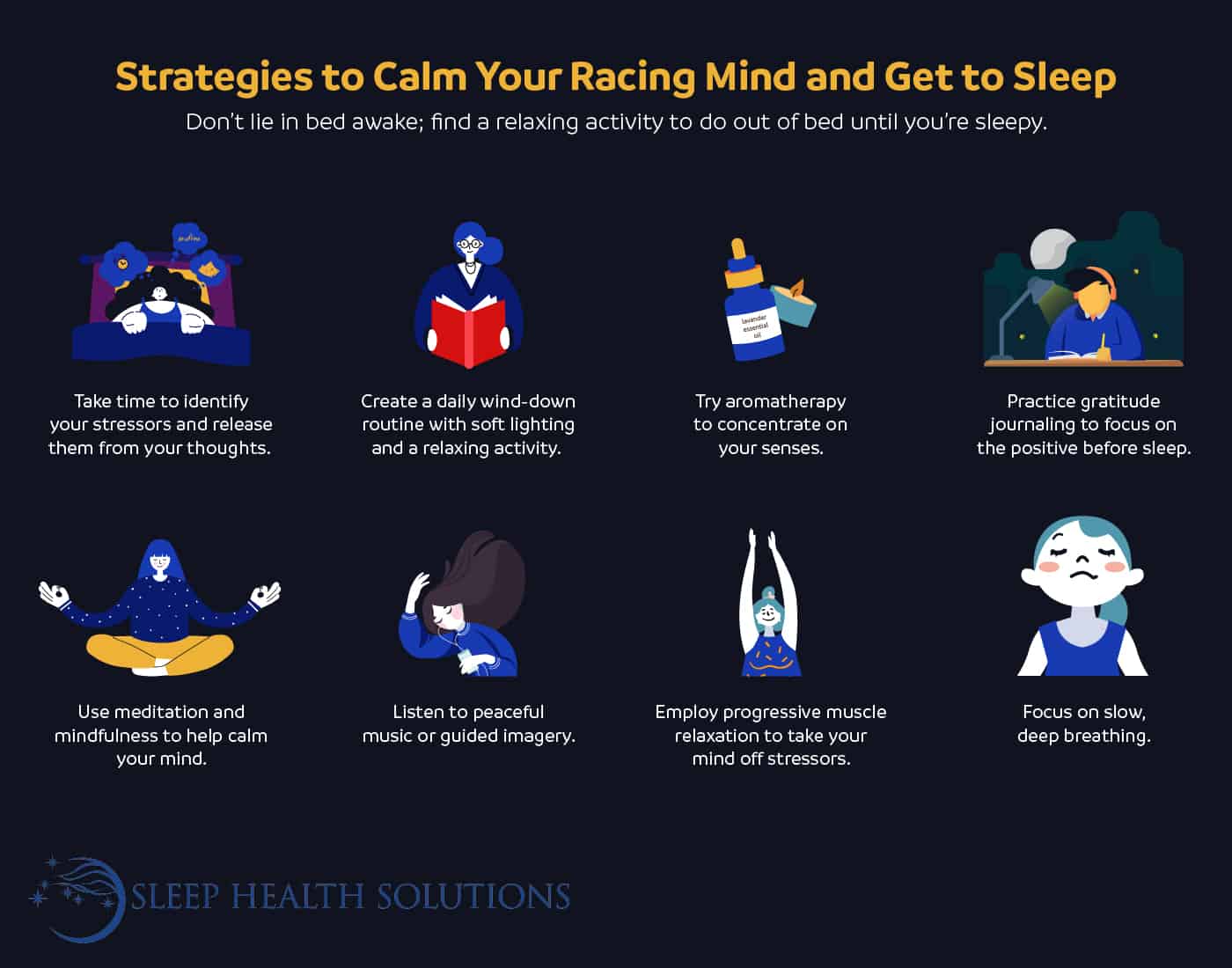
This infographic provides some advice for calming your brain and getting to sleep faster.
How to Get to Sleep when Your Mind Is Racing
If you are frustrated and tired, try these cognitive behavioral therapy techniques. You may discover a more relaxing and effective way to get the sleep you need.
Don’t Lie Awake in Bed
This can be a very frustrating problem that seems to become worse the more you think about it. It’s imperative that you break this vicious cycle of poor sleep and worry about not sleeping. For this reason, we recommend avoiding lying awake in bed. If you haven’t nodded off within 20 minutes of putting your head on the pillow, get up. Go back to your relaxing activity – journaling, reading, meditation, listening to music…Then, when you begin to feel sleepy, try to go back to bed.
This CBTi technique is called stimulus control. It may sound counter-productive, but many people find that engaging in a relaxing activity outside of bed helps occupy the brain in a positive way. This works to break the negative association that insomniacs and restless sleepers often develop in relation to bedtime.
Calm Your Mind
Relaxation training is what many commonly associate with calming exercises. Though these methods may feel silly at first, guided imagery, medication, and mindfulness are all beneficial for a racing mind. More specifically, you can focus on slowing your breath and using progressive muscle relaxation to take your mind off stressors.
Free Your Thoughts
It’s difficult to fall asleep when you are making lists of things to do and worrying about family, work, money, and other challenges. Rather than trying to simply ignore these thoughts, try to eliminate them from your thought patterns before bed. In the evening, you should get in the habit of identifying stressors by journaling and writing down lists for yourself. Once the ideas are on paper, you may find that you’ve freed up your mind.
Keep It Positive
To break the cycle of racing thoughts and worrying about lack of sleep, highlight the positive aspects of your life. Keeping a gratitude journal can help disrupt the negative mindset. Making this type of journaling a habit, gives you the opportunity to emphasize the good relationships and features that you are thankful for in your life.
Focus on Your Senses
To take the focus away from stressful thoughts, create a wind-down routine around sensorial experience. Lower the lights and consider a relaxing way to stimulate each of the five senses to find a method that works well for you. Here are some ideas.
- Sight – guided imagery, coloring mandalas, pictures of a peaceful place
- Smell – scented candle, aromatherapy
- Touch – warm bath, weighted blanket, self-massage, light yoga
- Taste – sleep-friendly snack, chamomile tea
- Hear – sound machine, white noise, instrumental music
Make the Bedroom Your Haven for Sleep
It’s important to reserve the bedroom for sleep and make it a relaxing space. This means keeping it neat and furnishing it with colors and textures that you find soothing, rather than stimulating. Keep work materials, computers, and screens out of the bedroom.
Good sleep hygiene includes turning the temperature down in the bedroom and using shades or curtains to make it dark and help induce sleep. To avoid counting minutes and worrying about not having enough time to get the rest you need, keep alarms and clocks away from the bed.
Want more advice? Check out these 10 Tips for Falling Asleep Faster.
Always Feeling Tired? Find the Solution
Contact Sleep Health Solutions of Ohio for a full sleep evaluation and begin the journey to a more rested life.